
How to Care for Your Free Flow Spa Cover: Cleaning, Maintenance, and When to Replace It
Posted by HTSS Team on Aug 24th 2026
How to Care for Your Free Flow Spa Cover: Cleaning, Maintenance, and When to Replace It
Your spa cover works harder than almost any other part of your Free Flow spa. It's outside year-round, holding in heat, keeping out debris, and taking a direct hit from sun, rain, and snow, yet it's usually the last thing owners think about until it's cracking, sagging, or waterlogged. A little routine care goes a long way toward getting the full expected lifespan out of a cover, and knowing the warning signs helps you catch a failing cover before it starts costing you money in wasted heating.
This guide covers proper cleaning technique, what to avoid, how to protect the vinyl between cleanings, the warning signs that mean repair or replacement, and what to consider when it's time for a new cover.
Why Cover Care Matters More Than Owners Think
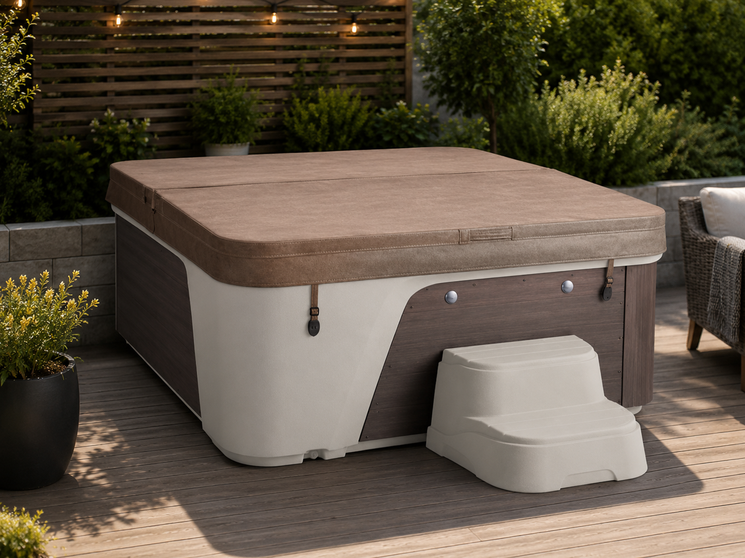
A cover in good condition does two jobs: it keeps heat inside the spa so your heater doesn't have to work overtime, and it keeps water and debris out of the foam core. Once a cover starts absorbing water (through a cracked vinyl top, a failed seam, or a broken zipper) it gets heavier, insulates worse, and can develop mold or mildew inside the foam that's difficult to fully remove. Left unaddressed, a waterlogged cover can end up costing more in extra energy use than a replacement would have cost outright.
Cleaning Your Cover the Right Way
Rinsing and Washing the Top
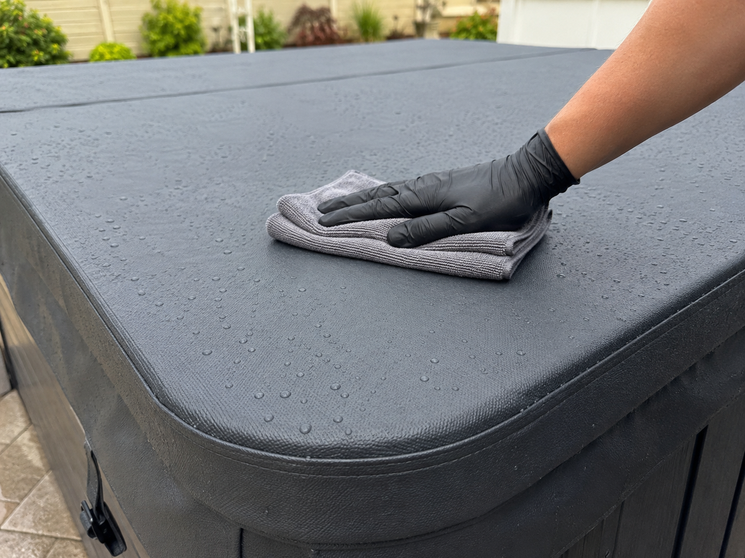
Start with a low-pressure garden hose rinse to knock off loose dirt and debris before applying any cleaner. Follow with a gentle, pH-neutral, non-foaming cleaner made for spa covers, and wipe it down with a soft, non-abrasive sponge or cloth. Avoid a pressure washer or a high-pressure hose nozzle, vinyl tops are more delicate than they look, and aggressive pressure can wear through the protective topcoat faster than normal sun exposure would.
Don't Forget the Underside
The underside of the cover collects condensation, humidity, and occasionally splashed spa water, which makes it just as important to clean as the top. Rinse it with a gentle stream of water and use a soft brush with a mild cleaning solution on any tougher spots. Neglecting the underside is one of the more common reasons a cover starts smelling musty well before the vinyl itself shows visible wear.
What Not to Use
Certain common household cleaners actively damage spa covers rather than helping them. Avoid laundry detergent, dish soap, bleach, alcohol-based cleaners, and abrasive scouring pads, all of these strip the vinyl's protective topcoat, which is what gives it water repellency and UV resistance in the first place. Once that topcoat is compromised, the cover ages noticeably faster, even with otherwise careful handling.
Protecting the Vinyl Between Cleanings
Marine-grade vinyl comes with built-in UV protection, but that protection fades with sun exposure over time and benefits from reinforcement. Applying a vinyl protectant spray made specifically for spa covers every couple of months helps guard against cracking and fading, especially for covers that sit in direct sun for most of the day. If your Free Flow spa is in a particularly sunny or exposed location, lean toward the more frequent end of that schedule.
Signs of Wear and When to Repair vs. Replace
Small Tears and Zipper Issues
A small vinyl tear or a broken zipper seam is worth addressing immediately rather than waiting, since either one gives water a direct path into the foam core. A vinyl repair kit can patch small tears effectively, and a broken zipper should be fixed or replaced as soon as it's noticed. These are inexpensive fixes compared to the cost of a fully waterlogged cover.
Waterlogged Foam
If your cover has become noticeably heavier than it used to be, that's usually a sign water has worked its way into the foam core, most often through an unrepaired tear, a failed seam, or age-related breakdown of the vinyl. Waterlogged foam doesn't dry out on its own and doesn't insulate properly once compromised. At that point, repair generally isn't cost-effective, and replacement is the better move.
How Water Chemistry Affects Your Cover
Spa water chemistry and cover longevity are more connected than most owners realize. Water that's out of balance (particularly high chlorine or unbalanced pH) can bleach and degrade the underside of the cover over time, especially with a cover that sits closed for long stretches trapping chemical vapor against the vinyl. Testing and balancing your water on a regular schedule protects your cover as a side benefit of protecting the water itself, and it's one more reason routine water testing pays off beyond just sanitizing.
Seasonal Cover Care Considerations
Summer Heat and Direct Sun
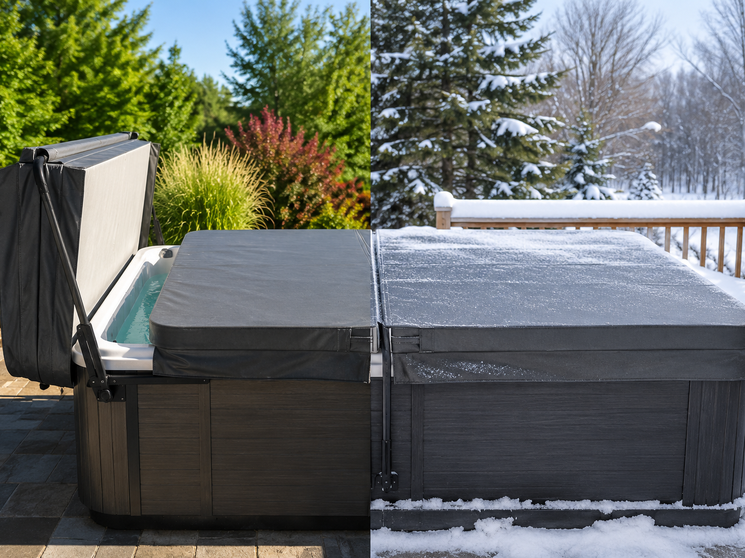
Intense summer sun is one of the fastest ways a cover ages, since UV exposure is what breaks down the protective topcoat over time. If your Free Flow spa sits in a spot with little natural shade, lean toward the more frequent end of the protectant schedule during the sunniest months, and consider a light-colored cover if you're choosing a replacement, since darker vinyl absorbs more heat and can accelerate breakdown.
Winter Snow and Ice
Heavy, wet snow left sitting on a cover adds substantial weight and stress to the seams and foam core over time. Brush snow off after significant accumulation rather than letting it pile up, and avoid using anything sharp to clear ice, since even a plastic shovel edge can nick the vinyl. This is also where foam density matters most, a cover with denser foam handles repeated snow load far better over multiple winters than a standard-density one.
Everyday Convenience
A cover lifter isn't strictly a maintenance item, but it indirectly protects the cover's lifespan by making it easier to remove and set the cover down properly instead of dragging it off to the side or leaning it against a fence, both of which stress seams and can scuff the vinyl over time.
Expected Lifespan and Replacement Timing
With consistent cleaning, protectant application, and prompt repair of small damage, a well-made spa cover typically lasts four to six years. Climate plays a real role here. Covers in consistently sunny, hot, or heavy-snow climates tend toward the shorter end of that range, while covers that are well cared for in milder conditions can stretch toward the longer end. If your cover is approaching that age range and starting to feel heavier or look faded and stiff, it's worth inspecting closely rather than waiting for an obvious failure.
Choosing a Replacement Cover for Your Free Flow Spa
When it's time to replace rather than repair, fit matters more than almost anything else, a cover that's even slightly off from your spa's exact dimensions won't seal properly, which undercuts insulation and accelerates wear from day one. Foam density is the next consideration: standard density works well for most climates, while a denser foam core is worth the upgrade if you're in an area with heavy snow load. Beyond that, look for genuine marine-grade vinyl and secure, lockable tie-down straps, which both extend the cover's working life and keep it properly secured in wind.
Frequently Asked Questions
How often should I clean my Free Flow spa cover?
A light rinse and wipe-down every couple of weeks keeps dirt and grime from building up, with a more thorough cleaning using a pH-neutral cover cleaner roughly once a month.
Can I use regular car or household vinyl cleaner on my spa cover?
It's best to use a cleaner formulated specifically for spa covers. General-purpose vinyl or household cleaners can contain ingredients that strip the protective topcoat spa covers rely on.
How do I know if my cover has become waterlogged?
The clearest sign is noticeable added weight when lifting it compared to when it was new, often along with reduced insulating performance and a musty smell from trapped moisture in the foam.
Is it normal for a cover to fade over time?
Some gradual fading from UV exposure is normal even with good care, but rapid or uneven fading usually signals the protective topcoat has broken down and the cover needs more frequent protectant application, or is nearing the end of its useful life.
What foam density should I choose for a replacement cover?
Standard foam density works fine for most locations. If you're in an area that regularly sees heavy snow accumulation, a denser foam core is worth the upgrade for added structural support.
Do I need to remove my cover in extreme heat or cold?
No, covers are built to stay on year-round, but brushing off heavy snow accumulation in winter and applying protectant more often during intense summer sun both help offset the added seasonal stress.
Treat your Free Flow spa cover as routine maintenance rather than an afterthought: rinse and clean it regularly, protect the vinyl every couple of months, repair small damage immediately, and keep an eye on its weight and flexibility as it ages. Do that consistently, and you'll get the full four-to-six-year lifespan out of it, and keep your spa running efficiently the whole time.