
Free Flow Spa Filter Replacement Schedule and Sizing Guide
Posted by HTSS Team on Aug 31st 2026
Free Flow Spa Filter Replacement Schedule and Sizing Guide
Filters are the least glamorous part of spa maintenance and one of the easiest to fall behind on, since a filter can look fine while already well past its effective service life. Free Flow Spas has specific guidance on filter sizing and replacement timing that differs slightly from generic hot tub advice, and knowing your model's actual schedule takes the guesswork out of one of the most routine parts of owning the spa. This guide covers filter sizing across the Free Flow lineup, the replacement schedule Free Flow itself recommends, and how to spot a filter that needs attention before your water quality suffers.
Filter Sizing Across the Free Flow Lineup
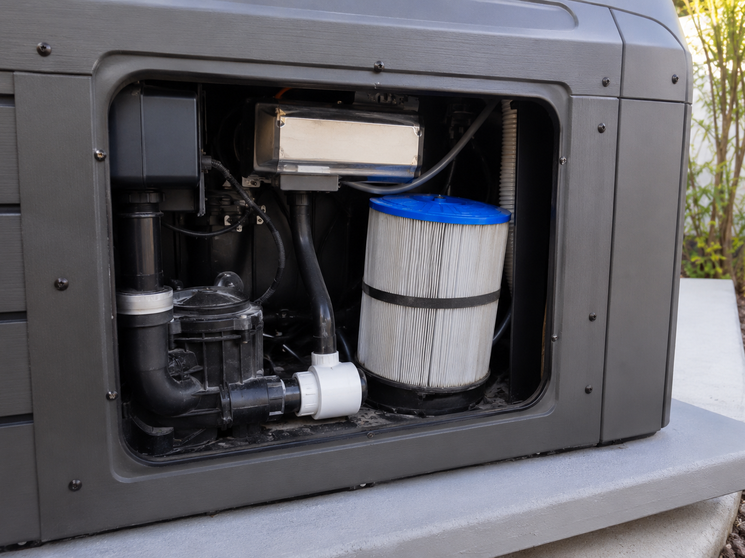
Nearly every model in the Free Flow lineup uses the same 50 square foot filter cartridge, which simplifies ordering if you own one of the standard-size models. The exception is the Freeflow Mini, the smallest model in the line, which uses a 25 square foot filter instead, sized appropriately for its smaller water volume and lower bather capacity. Before ordering a replacement, confirm which size your specific model uses rather than assuming the standard 50 square foot cartridge applies across the board, since ordering the wrong size means a filter that either does not seat properly or does not provide adequate filtration for your spa's actual volume.
The Official Replacement Schedule
Free Flow's own guidance calls for filter replacement every six to eight months under normal use, which is a somewhat tighter window than the roughly one-year lifespan you will sometimes see quoted as a general rule of thumb for hot tub filters. The six-to-eight-month window assumes reasonably regular cleaning in between full replacements. Heavier bather load, more frequent use, or inconsistent water chemistry can all push a filter toward the shorter end of that range, while lighter use and well-maintained water chemistry can sometimes stretch a filter closer to the upper end.
Why the Schedule Is Tighter Than the General Rule of Thumb
A filter's ability to trap fine particles degrades gradually, well before it looks visibly dirty or clogged. Replacing on Free Flow's recommended six-to-eight-month cycle, rather than waiting for a visible problem or pushing toward the full one-year mark some general guidance suggests, keeps filtration performance closer to what the filter was designed to deliver when new. This matters more for water clarity and reduced strain on your sanitizing system than most owners initially expect.
Routine Cleaning Between Replacements
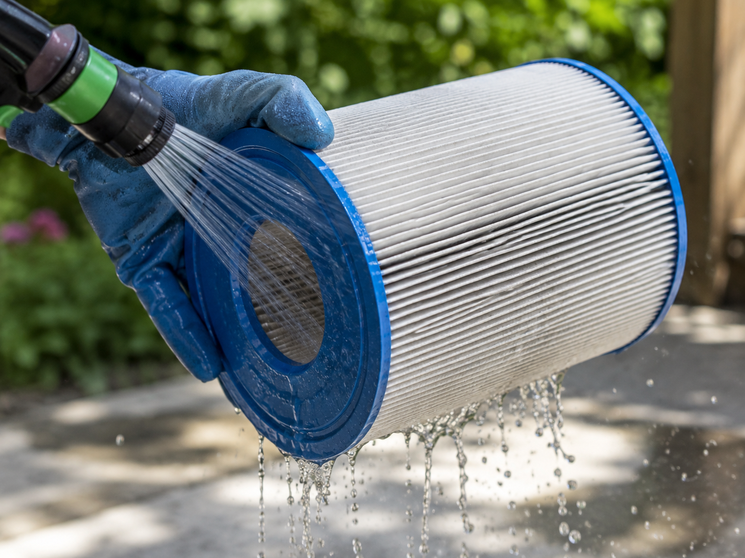
Regular cleaning extends how well a filter performs within its replacement window, even though it does not extend the window itself. A basic garden hose rinse every one to two weeks removes surface debris from the pleats. A more thorough soak in a dedicated filter cleaning solution every month or so removes oils and fine particles that a simple rinse will not fully clear. Both steps matter, but neither replaces the need for a full cartridge swap on the recommended schedule, since filter media itself breaks down structurally over time regardless of how well it is cleaned.
Silver Ion Cartridge Compatibility
Free Flow's approved replacement filters are compatible with Silver Ion cartridges, which add a supplementary layer of antimicrobial protection to your filtration system. This is not a replacement for your primary sanitizer, but it is a reasonable add-on for owners looking for extra protection between water changes, particularly in spas that see heavier or more frequent use.
Where the Cartridges Sit in Your Spa's Plumbing
Free Flow spas equipped with FROG @ease typically use an in-line holder built into the circulation plumbing rather than a floating dispenser sitting loose in the water. Water passes through the holder as part of normal circulation, picking up minerals and chlorine at a controlled rate rather than relying on the cartridges simply sitting in open water. This in-line placement is part of why the flip indicator and cartridge access are usually found near the equipment compartment rather than floating visibly on the water's surface, which is worth knowing if you are looking for the indicator for the first time and do not immediately see it in the water.
How Free Flow's Filter Cycles Affect Replacement Timing
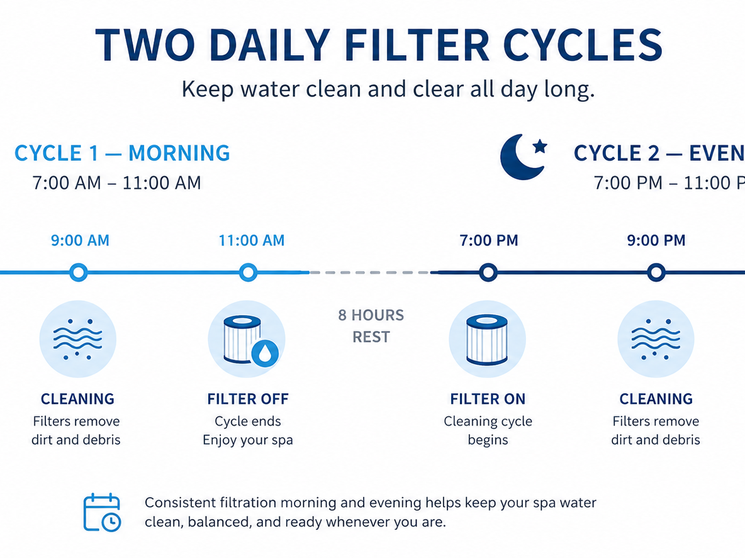
Free Flow spas run filtration on a programmed cycle rather than continuously, with two separate cycles built into the control system. The first cycle starts automatically right after the spa powers on, and the second begins roughly 12 hours later, with each cycle running at low pump speed for a set duration (commonly around an hour for the first cycle and 30 minutes for the second, though this can vary by model and settings). Understanding this matters for filter wear, since a filter's effective lifespan is tied to actual cycle time and water volume processed, not just the calendar. A spa with extended cycle durations, or one that has jets run more frequently throughout the day, will put more cumulative load on the filter than the Free Flow's default programmed cycles alone would suggest, which is part of why heavier household use can justify replacing closer to the six-month end of the recommended window rather than the eight-month end.
Cost of Neglecting the Schedule Versus Staying on Track
A filter that runs well past its effective life does not just filter less effectively. It also forces the pump to push water through increasingly restricted media, which can increase energy use and add strain to the pump motor over time. Staying on the recommended replacement schedule is a genuinely low-cost habit compared to the potential downstream cost of a pump working harder than it should, or water quality problems that require additional chemical correction to manage. Thought of this way, routine filter replacement is less an expense and more a way of protecting the more expensive components in the system.
Signs Your Filter Is Overdue
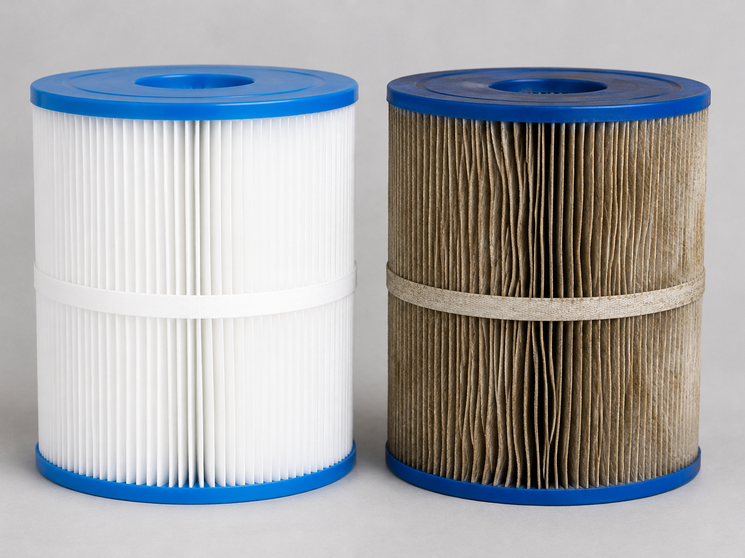
A filter well past its effective life shows up in a few predictable ways: reduced water flow through the jets, longer heating recovery times as circulation efficiency drops, cloudier water despite normal sanitizer readings, and a filter that looks compressed, discolored, or has pleats that have started to collapse into each other. If you notice any of these signs before your scheduled six-to-eight-month replacement, it is worth swapping the filter early rather than waiting out the calendar.
Tracking Your Replacement Schedule
Because filter degradation is not always visually obvious, the most reliable approach is tracking replacement by date rather than by appearance. Writing the installation date somewhere visible, or setting a simple recurring reminder, takes the guesswork out of a maintenance task that is otherwise easy to lose track of over months of routine use.
Keeping a Spare on Hand
Since filters are a routine, predictable replacement rather than an occasional repair, it makes sense to keep at least one spare cartridge in stock rather than ordering reactively once the current one is clearly overdue. This avoids a gap in proper filtration while waiting for a new one to arrive, particularly since a struggling filter left in place too long can put additional strain on your pump and sanitizing system in the meantime.
Frequently Asked Questions
How do I know if my Free Flow spa uses the 50 or 25 square foot filter?
Check your owner's manual or the model name on your spa's data plate. The Freeflow Mini is the only model in the lineup that uses the smaller 25 square foot filter; nearly every other model uses the standard 50 square foot size.
Is six to eight months really necessary, or can I stretch it longer?
Free Flow's own guidance specifically recommends this window for normal use. Stretching beyond it risks reduced filtration performance well before the filter looks visibly worn, even with regular cleaning in between.
Does cleaning my filter regularly mean I can skip full replacements?
No. Cleaning removes surface debris and extends how well the filter performs within its service life, but it does not reverse the structural breakdown of the filter media itself over time.
What is a Silver Ion cartridge, and do I need one?
It is a compatible add-on cartridge that provides supplementary antimicrobial protection alongside your primary sanitizer. It is optional, but a reasonable choice for spas with heavier use or owners wanting extra protection between water changes.
What is the easiest way to remember when to replace my filter?
Write the installation date on the cartridge itself with a permanent marker, or set a recurring calendar reminder at the six-month mark to check whether replacement is due based on your actual usage.
Do the two programmed filter cycles mean my filter works twice as hard as I think?
They mean filtration happens at scheduled intervals rather than continuously, which is normal and by design. Heavier household use and longer cycle durations both push wear toward the shorter end of the six-to-eight-month window.
Staying on Free Flow's recommended six-to-eight-month filter replacement schedule, combined with routine cleaning in between, is one of the simplest and most impactful things you can do for consistent water clarity. It is a small, predictable task that pays off directly in less strain on your pump, heater, and sanitizing system, and it costs far less than dealing with the downstream effects of skipping it.