
Converting Your Free Flow Spa From 115V to 230V: Faster Heating, What It Takes, and Is It Worth It?
Posted by HTSS Team on Sep 14th 2026
Converting Your Free Flow Spa From 115V to 230V: Faster Heating, What It Takes, and Is It Worth It?
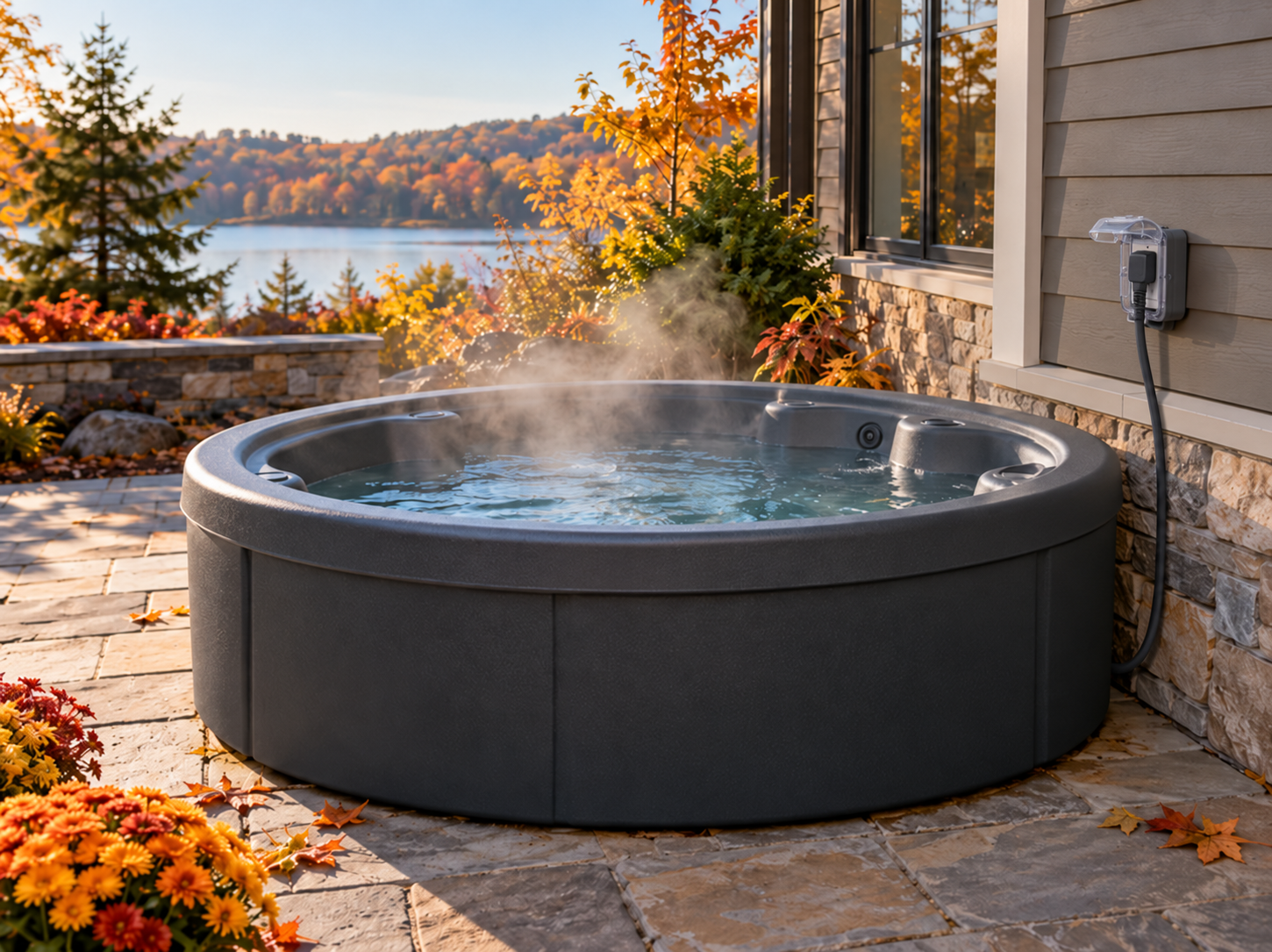
One of the best things about a Free Flow spa is how easy it is to start using. Every model ships as a plug-and-play hot tub that runs on a standard 115 volt household circuit, so you can fill it, plug it in, and start heating without hiring an electrician. For many owners, that is all they ever need. But if you live somewhere with cold winters, use your spa heavily, or find yourself waiting a long time for the water to recover after a soak, you may have heard that Free Flow spas can be converted to 230 volt power.
This guide explains how Free Flow's electrical options work, what actually changes when you convert, what the conversion involves, and how to decide whether it is worth it for your household.
Free Flow's Three Electrical Configurations
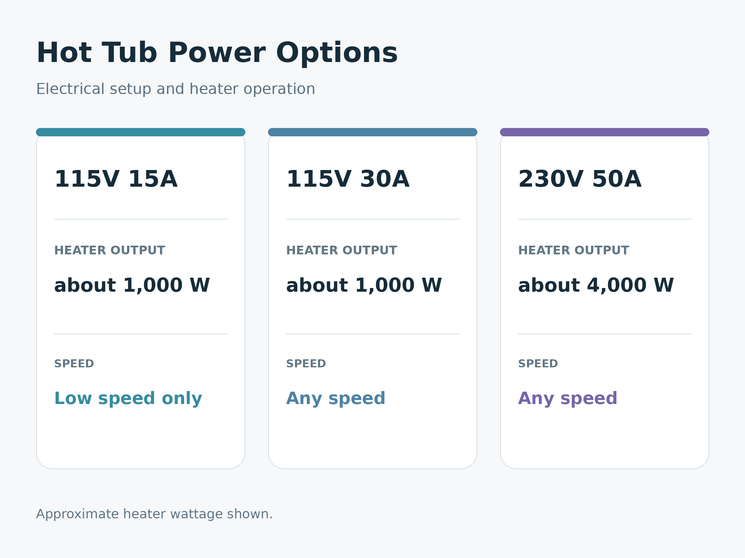
According to Free Flow's owner's manual, the spa's control system is designed to operate on one of three circuits. The difference between them is mostly about how much heat the spa can produce, and when.
115 Volt, 15 Amp (Cord Connected, as Shipped)
This is the plug-and-play setup. The spa comes with a factory-installed 15 foot GFCI cord that plugs into a grounded, dedicated 115 volt, 15 amp outlet. In this configuration, the heater provides about 1,000 watts of heat, and only when the pump is running on low speed and the thermostat is calling for heat. The heater does not run while the pump is on high speed.
115 Volt, 30 Amp (Permanently Connected Field Conversion)
A licensed electrician can hardwire the spa to a 30 amp GFCI subpanel. The heater still produces about 1,000 watts, but it can now run when the pump is on low or high speed. That means the spa keeps heating while you use the jets on high.
230 Volt, 50 Amp (Permanently Connected Field Conversion)
This is the full conversion most owners mean when they talk about going to 230 or 240 volts. Hardwired to a 50 amp GFCI subpanel, the heater produces about 4,000 watts, roughly four times the heat of the plug-in setup, and it runs whenever heat is needed, at either pump speed.
What Changes in Everyday Use
Faster Heat-Up and Recovery
The most noticeable difference is heating speed. With about four times the heater output, a 230 volt Free Flow brings water up to temperature much faster after a refill, and recovers heat much faster after a soak with the cover off. In cold weather, that difference can be the line between a spa that stays at your preferred temperature and one that slowly loses ground.
Heating While You Use the Jets
On the standard 115 volt, 15 amp setup, the heater shuts off whenever the pump runs on high. During a long soak with the jets running on high on a cold night, water temperature can drift downward. Both field conversions allow the heater to run on either pump speed, so the water holds its temperature better during use.
No Change to the Spa Itself
The jets, seating, filter, lighting, and water care all stay the same. Conversion changes how power reaches the spa and how the control system uses it, not the hot tub experience itself.
What the Conversion Involves
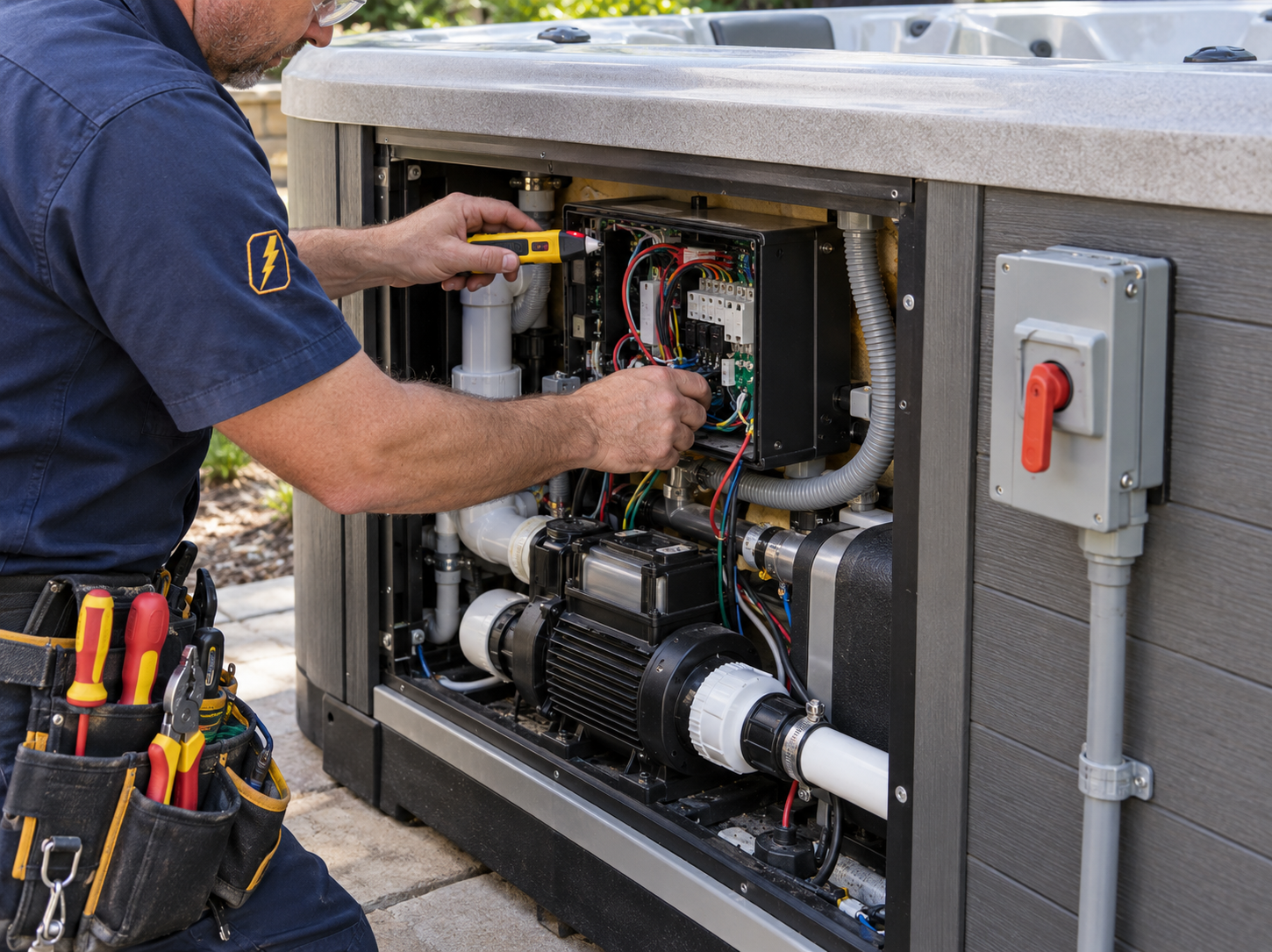
Free Flow's manual is clear that either field conversion requires a licensed electrician. This is not a do-it-yourself project. Here is what the process generally includes, so you know what to expect and what to discuss with your electrician.
A New Dedicated Circuit and GFCI Subpanel
A 30 amp or 50 amp GFCI subpanel is required, and it is not included with the spa. The circuit must be dedicated to the spa, labeled, and easily accessible. The disconnect must be readily accessible from the spa but installed at least 5 feet from the spa water.
Hardwiring the Spa
For a 230 volt installation, the manual specifies a 4-wire supply with a minimum 50 amp GFCI breaker and a minimum of #8 AWG copper wire for runs under 100 feet. Wire size depends on the length of the run and must meet the National Electrical Code and local codes. All wiring must be copper, never aluminum. Once converted, a 230 volt spa must be hardwired only. Free Flow warns that using an extension cord or a disconnectable power cord on a 230 volt spa is highly dangerous and voids all warranties.
Bonding and Grounding
Converted spas have a ground terminal and a bonding terminal on the control box. Metal within 5 feet of the spa, such as railings or pipes, must be bonded to meet local requirements. Your electrician will handle this as part of the installation.
Reconfiguring the Control System
After a 30 amp or 50 amp field conversion, the control system has to be told about the new setup. The manual describes a low-level settings change, from the factory default that does not allow the heater and high-speed pump to run together, to a configuration that does. Without this step, the spa will not take full advantage of the new circuit. Make sure your electrician completes it before finishing the job.
Is Converting Worth It?
Good Reasons to Convert
- You live in a cold climate and use the spa through the winter.
- You often soak with the jets on high for long sessions.
- Several people use the spa back-to-back and the water cools between sessions.
- You want faster heat-up after draining and refilling.
- You plan to keep the spa in one location long-term.
Good Reasons to Stay Plug and Play
- You live in a mild climate and the spa holds temperature well.
- Your soaks are short, or you mostly use low-speed jets.
- You may move the spa or take it with you when you move.
- Running a new 50 amp circuit to your spa location would be costly.
Consider the Cost
Conversion cost depends almost entirely on your home's electrical situation: available panel capacity, the distance from your main panel to the spa, and local permit requirements. Ask a licensed electrician for a quote before deciding. In some homes it is a simple job. In others, a panel upgrade may be needed first.
What About Energy Use?
A common question is whether converting raises your electric bill. A bigger heater draws more power while it runs, but it also runs for a much shorter time to deliver the same amount of heat, so the total energy needed to warm a given amount of water is similar. What changes your bill most is heat loss: cover condition, air temperature, wind, how long the cover stays off, and whether air controls are left open. Converting mainly buys you speed and the ability to heat during high-speed jet use, not a lower bill.
Getting the Most From Plug and Play
If you decide to stay on 115 volts, a few habits make a big difference:
- Keep the cover on and sealed whenever the spa is not in use. A cover in good condition is the single biggest factor in holding heat.
- Close the air controls after each soak, since Free Flow notes open air controls let cold air into the water.
- Plan ahead after refilling, allowing extra time for the water to reach temperature.
- Use low-speed jets when possible on cold days, so the heater can keep running.
- Never use an extension cord. Free Flow warns that it degrades performance and creates an electrical hazard.
Frequently Asked Questions
Can every Free Flow spa be converted to 230 volts?
Free Flow states that its spas ship as 115 volt plug-and-play hot tubs that can be converted by a licensed electrician. Confirm the electrical specs for your model and year in your owner's manual before planning a conversion.
How much faster does a 230 volt Free Flow heat?
The heater produces about 4,000 watts on 230 volts versus about 1,000 watts on 115 volts, and it can run at either pump speed. Actual heating time depends on weather, starting water temperature, and cover condition.
Can I do the conversion myself?
No. Free Flow's manual states that either field conversion requires a licensed electrician, along with a GFCI subpanel that is not included with the spa.
Why does my plug-in Free Flow stop heating when the jets are on high?
On the standard 115 volt, 15 amp setup, the heater only operates when the pump is on low speed. That is normal behavior, and one of the main reasons owners consider converting.
Can I use an extension cord to reach my outlet?
No. Free Flow warns against extension cords under any circumstances. The 15 foot GFCI cord must plug directly into a dedicated, grounded outlet.
Free Flow's plug-and-play design makes it easy to get started, and the option to convert means your spa can grow with the way you use it. If cold weather or long soaks leave you waiting on the heater, a 230 volt conversion by a licensed electrician delivers roughly four times the heating power. If your spa already keeps up, plug and play may be all you ever need.